2026 Tax Changes: Small Business Deadline Approaching

The year 2026 introduces critical federal tax code changes that small businesses must understand and act upon immediately to ensure compliance and optimize financial strategies.
The landscape of federal taxation is constantly evolving, and for small businesses across the United States, 2026 small business tax changes represent a pivotal moment. With deadlines looming, understanding and preparing for these significant shifts isn’t just prudent; it’s absolutely essential for continued financial health and operational stability. This isn’t a distant concern; it’s an immediate call to action for every entrepreneur and small business owner.
Understanding the Looming Sunset of TCJA Provisions
Many key provisions of the Tax Cuts and Jobs Act (TCJA) of 2017 are set to expire, or ‘sunset,’ at the end of 2025, ushering in a new tax era for 2026. This expiration will profoundly reshape the tax obligations and planning strategies for numerous small businesses, necessitating a thorough review of current financial models.
The TCJA brought about substantial changes, from corporate tax rate reductions to various pass-through entity deductions. Its sunset means a reversion to pre-TCJA tax law for many aspects, impacting everything from individual income tax rates for pass-through owners to certain business deductions. This isn’t merely a minor adjustment; it’s a fundamental shift that could significantly alter your bottom line.
Impact on Individual Income Tax Rates
For many small businesses structured as pass-through entities (S corporations, partnerships, sole proprietorships), the owners pay business taxes on their individual income tax returns. The TCJA reduced individual income tax rates across most brackets, but these lower rates are scheduled to expire.
- Higher Tax Brackets: Expect a return to higher marginal tax rates for individual income, directly affecting how much owners of pass-through entities pay in federal taxes.
- Standard Deduction Changes: The increased standard deduction under TCJA will also revert, potentially reducing the tax benefit for many taxpayers who don’t itemize.
- Personal Exemptions: The TCJA eliminated personal exemptions, and while they won’t automatically return, their absence will continue to impact taxable income calculations.
These changes mean that small business owners need to re-evaluate their personal tax planning alongside their business strategies. The combined effect of higher rates and altered deductions could significantly increase their overall tax burden.
Qualified Business Income (QBI) Deduction Expiration
Advertisement
One of the most significant benefits for many small businesses under TCJA was the Section 199A Qualified Business Income (QBI) deduction, allowing eligible pass-through entities to deduct up to 20% of their qualified business income. This deduction is also slated to expire.
The loss of the QBI deduction will directly increase the taxable income for many pass-through businesses. This particular change demands immediate attention, as it has been a substantial tax relief for countless small enterprises since its inception. Business owners must model scenarios both with and without this deduction to understand the full financial implications.
The sunsetting of these TCJA provisions is not a hypothetical situation but a scheduled event. Small businesses must proactively engage with their tax advisors to understand how these reverts will specifically impact their entity structure and income levels, allowing for strategic adjustments before 2026.
Navigating Changes to Business Expense Deductions
Beyond the sunsetting of TCJA provisions, other critical federal tax code changes for 2026 affect how small businesses can deduct various expenses. These modifications can impact cash flow and profitability, making it imperative for businesses to understand and adapt their accounting practices.
One notable area of change involves research and experimental (R&E) expenses. Prior to 2022, businesses could immediately deduct these costs. However, under current law, R&E expenses incurred in tax years beginning after December 31, 2021, must be capitalized and amortized over five years for domestic research and fifteen years for foreign research. While this change already took effect, its ongoing impact will be fully realized by 2026, creating a sustained shift in how businesses manage innovation costs.
Section 179 Expensing and Bonus Depreciation Adjustments
Section 179 expensing allows businesses to deduct the full purchase price of qualifying equipment and software during the year it was placed in service, rather than depreciating it over several years. Bonus depreciation, another accelerated depreciation method, permits businesses to deduct a large percentage of the cost of eligible property in the year it’s placed in service.
- Bonus Depreciation Phase-Out: Bonus depreciation began phasing down in 2023, decreasing from 100% to 80%, then to 60% in 2024, 40% in 2025, and 20% in 2026, before expiring entirely in 2027. This gradual reduction means that by 2026, the immediate write-off for new assets will be significantly less generous.
- Section 179 Limits: While Section 179 expensing limits are adjusted for inflation annually, businesses must not confuse it with bonus depreciation. The reduction in bonus depreciation makes Section 179 even more critical for immediate write-offs, but its limits and phase-out thresholds still apply.
These changes require small businesses to carefully plan their capital expenditures. Purchasing significant assets before 2026 could offer greater tax advantages compared to delaying those investments. Understanding the declining benefits of bonus depreciation is key to optimizing equipment acquisition strategies.
Another area warranting attention is the limitation on business interest expense deductions under Section 163(j). While temporary relief was provided, the rules could become more stringent again, impacting highly leveraged businesses. Small businesses need to assess their debt structures and interest expenses in light of potential future limitations.
In conclusion, the evolving landscape of business expense deductions, particularly regarding R&E expenses and the phase-out of bonus depreciation, demands proactive financial modeling. Businesses must adapt their capital expenditure plans and accounting practices to mitigate potential increases in taxable income and preserve cash flow.
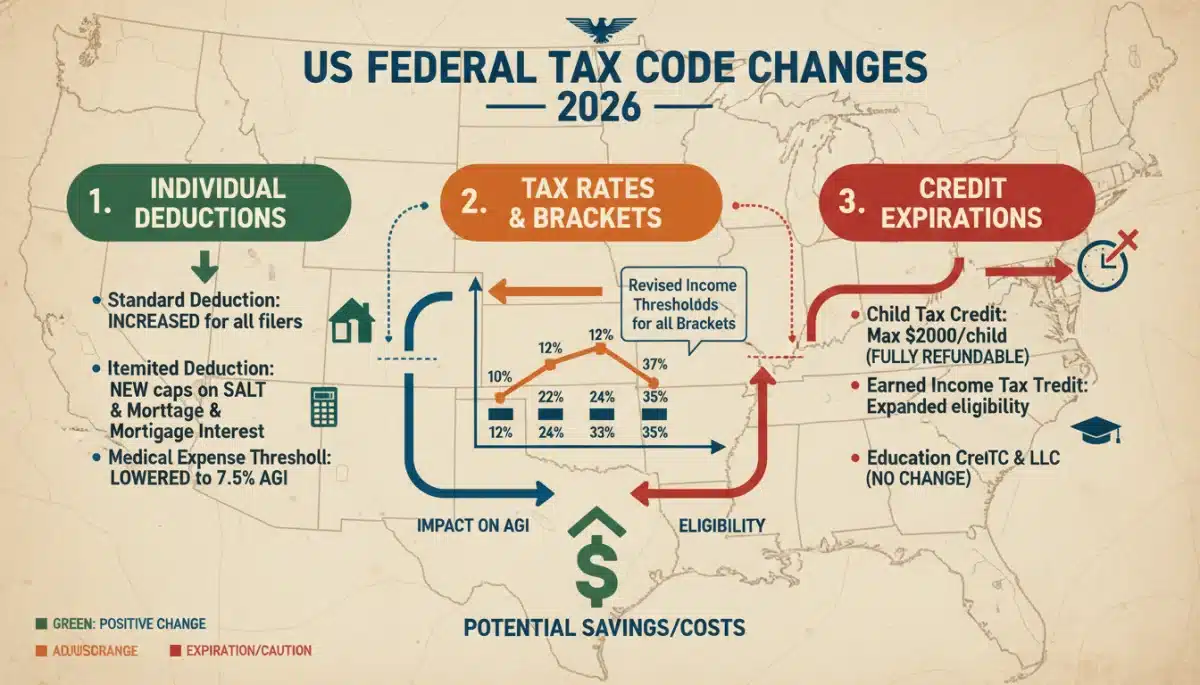
Potential Alterations to Tax Credits and Incentives
Beyond direct deductions and rate changes, the federal tax code also offers various credits and incentives designed to encourage specific business activities, such as research and development, hiring certain employee groups, or investing in particular technologies. Many of these provisions have sunset dates or are subject to legislative review, making their future uncertain for 2026.
Small businesses often rely on these credits to offset tax liabilities and fund growth initiatives. The potential expiration or modification of these incentives could significantly impact strategic investments and operational budgets. Staying informed about legislative developments is paramount.
Research and Development (R&D) Tax Credit Status
The R&D tax credit (Section 41) is a valuable incentive for businesses engaged in innovative activities. While it has generally enjoyed bipartisan support, its specific parameters and permanence are subject to ongoing legislative discussion. Small businesses that heavily rely on this credit for innovation funding need to monitor its status closely.
The R&D tax credit allows companies to claim a credit for increasing research activities. For many small businesses, this credit is a critical lifeline, enabling them to invest in new products, processes, and technologies. Any changes to its calculation, eligibility, or permanence could have far-reaching effects on innovation within the small business sector.
Other Key Credits and Their Future
Several other tax credits and incentives could see changes or expirations by 2026, each impacting different sectors or types of business activities:
- Work Opportunity Tax Credit (WOTC): Encourages employers to hire individuals from target groups facing significant barriers to employment. Its continued availability is crucial for businesses that utilize it.
- Employer Credit for Paid Family and Medical Leave: This credit, introduced under the TCJA, allows employers to claim a credit for providing paid family and medical leave to employees. It is also scheduled to expire.
- Energy-Related Credits: Various credits for investing in renewable energy or energy-efficient property may be subject to revisions or expirations, influencing investment decisions in green technologies.
Each of these credits plays a role in encouraging specific business behaviors and investments. Their potential alteration or expiration means small businesses must diversify their incentive strategies and not become overly reliant on any single credit. A comprehensive review of all applicable credits and their respective sunset dates is highly recommended.
In essence, the landscape of tax credits and incentives is dynamic. Small businesses must engage in continuous monitoring of legislative changes and consult with tax professionals to understand which credits are likely to persist, which might expire, and how these shifts will influence future business planning and investment decisions.
Strategic Planning for 2026: What Small Businesses Must Do Now
Given the imminent federal tax code changes for 2026, proactive and strategic planning is not just advisable, but absolutely critical for small businesses. Waiting until the last minute could lead to missed opportunities, increased tax liabilities, and unnecessary financial strain. The time to act is now, to ensure a smooth transition and maintain fiscal health.
A comprehensive review of your current business structure and financial practices is the first step. This involves analyzing how your business is currently taxed, what deductions and credits you utilize, and how potential changes will specifically impact your unique situation. Generic advice won’t suffice; a tailored approach is essential.
Consulting with Tax Professionals and Financial Advisors
The complexity of the impending tax changes underscores the importance of professional guidance. Engaging with experienced tax professionals and financial advisors specializing in small business taxation is paramount. They can provide insights tailored to your specific industry and business model.
- Scenario Modeling: Advisors can help you model different tax scenarios for 2026, illustrating the potential impact on your cash flow and profitability under various legislative outcomes.
- Entity Structure Review: Depending on the changes, it might be beneficial to re-evaluate your business’s legal entity structure (e.g., sole proprietorship, S-corp, C-corp) to optimize tax efficiency.
- Compliance Updates: Tax laws are dynamic. Professionals stay updated on the latest legislative developments, ensuring your business remains compliant and takes advantage of any new provisions or extensions.
Do not underestimate the value of expert advice. A small investment in professional consultation now can save your business significant amounts in taxes and penalties later, while also providing peace of mind.
Adjusting Budgeting and Forecasting
The impending tax changes will undoubtedly affect your business’s financial forecasts and budgeting. It’s crucial to incorporate these potential shifts into your financial planning immediately to avoid surprises.
Begin by revising your long-term financial projections to account for higher potential tax liabilities or reduced benefits from deductions and credits. This will help you identify potential shortfalls or areas where cost-cutting or revenue generation efforts might be needed. Adjusting your budgeting process to reflect these new realities will ensure you allocate resources effectively and maintain a healthy cash reserve.
Strategic planning for 2026 involves a multi-faceted approach: seeking expert advice, meticulously reviewing your financial structure, and adapting your budgeting processes. The goal is to transform potential challenges into opportunities for optimized tax efficiency and sustained growth.
Optimizing Business Structure and Operations for Tax Efficiency
As the 2026 federal tax code changes draw nearer, small businesses have a unique opportunity to reassess and potentially optimize their operational and legal structures for enhanced tax efficiency. This isn’t about avoiding taxes, but about smart, legal strategies to minimize liabilities within the new framework.
The choice of business entity, for instance, becomes even more critical. While an S-corporation might have been optimal under TCJA’s QBI deduction, a C-corporation might offer different advantages if corporate tax rates remain relatively low while individual rates revert to higher levels. This decision requires careful analysis of projected income, owner compensation, and future growth plans.
Considering Entity Type Conversions
For some small businesses, a change in entity type might become a viable strategy. Converting from a sole proprietorship to an S-corporation, or even exploring a C-corporation, could yield tax benefits depending on your specific circumstances and the final shape of the 2026 tax code.
- S-Corp vs. C-Corp: Evaluate the trade-offs between pass-through taxation (S-Corp) and corporate-level taxation (C-Corp), considering double taxation implications versus lower corporate rates.
- Partnership Adjustments: For partnerships, review partnership agreements and profit-sharing ratios to ensure they align with new tax implications for individual partners.
- Professional Guidance: Any entity conversion or significant structural change should be undertaken with the guidance of legal and tax professionals to navigate complex regulations and avoid unintended consequences.
These structural considerations are not light decisions and require careful planning and understanding of both short-term and long-term impacts on the business and its owners.
Reviewing Compensation and Benefits Strategies
The impending changes could also influence how small businesses structure compensation and benefits for owners and employees. With potential shifts in individual tax rates and the expiration of certain employer-related credits, re-evaluating these strategies can lead to tax savings.
For example, if individual income tax rates increase, exploring tax-advantaged retirement plans or health savings accounts (HSAs) for owners and employees might become even more attractive. Similarly, reassessing the balance between salary and distributions for pass-through owners will be crucial to optimize their personal tax liabilities.
Optimizing business structure and operations for tax efficiency is a continuous process that becomes particularly urgent in anticipation of major tax code changes. By proactively reviewing entity types, compensation strategies, and seeking professional advice, small businesses can position themselves to thrive under the new tax regime.
Leveraging Technology for Enhanced Tax Compliance and Planning
In an era of evolving tax regulations and increased complexity, small businesses can no longer rely solely on manual processes for tax compliance and planning. Leveraging technology becomes a powerful asset, offering efficiency, accuracy, and strategic insights to navigate the 2026 federal tax code changes effectively.
Modern accounting software, tax preparation platforms, and financial analytics tools can automate routine tasks, minimize human error, and provide real-time data for informed decision-making. This technological integration is not just about filing taxes; it’s about building a robust financial infrastructure that can adapt to future regulatory shifts.
Implementing Advanced Accounting Software
Upgrading to or effectively utilizing advanced accounting software is a foundational step. These platforms offer more than just bookkeeping; they provide comprehensive financial management capabilities essential for tax planning.
- Automated Record Keeping: Ensures all financial transactions are accurately recorded and categorized, simplifying data retrieval for tax purposes.
- Real-time Financial Reporting: Provides immediate insights into profitability, expenses, and cash flow, allowing for timely adjustments in response to tax changes.
- Integration Capabilities: Many platforms integrate with payroll, CRM, and inventory systems, creating a unified view of financial operations and streamlining data flow for tax calculations.
Choosing the right software that aligns with your business size and complexity is crucial. Investing time in proper setup and employee training will pay dividends in enhanced efficiency and compliance.
Utilizing Tax Planning and Forecasting Tools
Beyond general accounting, specialized tax planning and forecasting tools can be invaluable. These tools often incorporate current and projected tax laws, allowing businesses to run various scenarios and understand the tax implications of different financial decisions.
Such tools can help model the impact of the 2026 tax changes on your specific business, including the expiration of the QBI deduction or changes in individual tax rates. They can also assist in optimizing capital expenditure timing, evaluating the tax benefits of various investments, and planning for future growth while minimizing tax liabilities. The ability to visualize potential tax outcomes empowers businesses to make proactive strategic adjustments.
By embracing technology, small businesses can transform tax compliance from a burdensome annual task into a continuous, strategic process. This proactive approach, driven by data and automation, will be instrumental in successfully navigating the 2026 federal tax code changes and positioning the business for sustained financial health.
Immediate Action Required: Deadline Approaching
The overarching message for small businesses regarding the 2026 federal tax code changes is clear: immediate action is required. The ‘deadline approaching’ isn’t a distant warning; it’s a present reality that demands proactive engagement and strategic foresight. Delaying preparations could lead to significant financial disadvantages and missed opportunities for optimization.
The complexity and breadth of the impending changes, from the sunsetting of TCJA provisions to alterations in deductions and credits, necessitate a thorough and timely response. Businesses that begin planning now will be better positioned to adapt, mitigate risks, and even find new avenues for tax efficiency in the evolving landscape.
Key Steps for Immediate Implementation
To ensure your small business is ready for 2026, consider these immediate steps:
- Conduct a Comprehensive Review: Work with your tax professional to assess how each of the major changes will specifically impact your business’s income, deductions, and credits. No two businesses are exactly alike, so a personalized assessment is crucial.
- Update Financial Models: Adjust your financial forecasts and budgets to reflect the potential tax liabilities and changes in cash flow for 2026 and beyond. This will help you identify any funding gaps or areas for strategic investment.
- Explore Proactive Strategies: Discuss potential entity structure changes, capital expenditure timing, and compensation adjustments with your advisors. Some decisions made in late 2024 or 2025 could have significant tax implications for 2026.
- Stay Informed: Continue to monitor legislative developments. While some changes are scheduled, there’s always a possibility of new legislation or extensions that could alter the landscape.
These actions are not merely suggestions; they are critical components of a robust preparedness strategy. The window for optimal planning is closing, and the benefits of early engagement are substantial.
The Cost of Inaction
Ignoring the impending tax changes or postponing preparation carries significant risks. Inaction could lead to:
- Increased Tax Burden: Unprepared businesses may face unexpectedly higher tax bills due to expired deductions or reverted rates, impacting profitability.
- Cash Flow Disruptions: Without proper forecasting, businesses might experience unexpected cash flow shortages, hindering operations and growth.
- Missed Opportunities: Delaying strategic decisions could mean missing out on opportunities to optimize entity structure, capital investments, or compensation plans for tax efficiency.
- Compliance Issues: A lack of understanding or preparation can lead to errors in tax filings, potentially resulting in penalties and audits.
The deadline for these federal tax code changes is not a suggestion but a fixed point. Small businesses must recognize the urgency and take immediate, decisive action to ensure they are well-prepared for 2026, transforming potential challenges into opportunities for resilience and growth.
| Key Change | Brief Description |
|---|---|
| TCJA Sunset | Individual tax rates and QBI deduction revert to pre-2017 levels, impacting pass-through entities significantly. |
| Expense Deductions | Bonus depreciation continues phase-out, and R&E expenses remain amortized, affecting capital expenditure planning. |
| Tax Credits & Incentives | Key credits like WOTC and employer paid leave are scheduled to expire, requiring a review of incentive strategies. |
| Proactive Planning | Small businesses must consult advisors, update financial models, and consider entity structure changes now. |
Frequently Asked Questions About 2026 Tax Changes
The main impact is the reversion of individual income tax rates to higher pre-2017 levels and the expiration of the 20% Qualified Business Income (QBI) deduction. This will likely increase the tax burden for owners of pass-through entities like S-corps and partnerships.
Bonus depreciation is phasing out, decreasing to 20% in 2026 and expiring in 2027. This means less immediate deduction for new asset purchases. Businesses should consider accelerating capital investments before 2026 to maximize current depreciation benefits.
Yes, with the upcoming changes, reviewing your entity structure (e.g., S-corp, C-corp) with a tax professional is highly recommended. The optimal structure for tax efficiency might shift depending on projected income and the final tax code, requiring careful evaluation.
Technology, through advanced accounting software and tax planning tools, is crucial. It enables automated record-keeping, real-time financial reporting, and scenario modeling to forecast tax impacts and optimize strategies, ensuring better compliance and financial health.
The most immediate action is to consult with a qualified tax professional or financial advisor. They can provide a personalized assessment of how the 2026 changes will affect your specific business and guide you in developing a proactive and effective tax planning strategy.
Conclusion
The impending federal tax code changes for 2026 represent a significant juncture for small businesses across the United States. From the sunsetting of key TCJA provisions to adjustments in depreciation and tax credits, the cumulative impact demands more than just awareness; it necessitates immediate, strategic action. Proactive engagement with tax professionals, a thorough review of business structures, and the adoption of modern financial tools are not merely recommendations but essential steps for navigating this evolving landscape successfully. By acting now, small businesses can transform potential challenges into opportunities for enhanced tax efficiency, sustained growth, and long-term financial resilience.
