Green Energy Incentives 2026: Save on US Home Upgrades
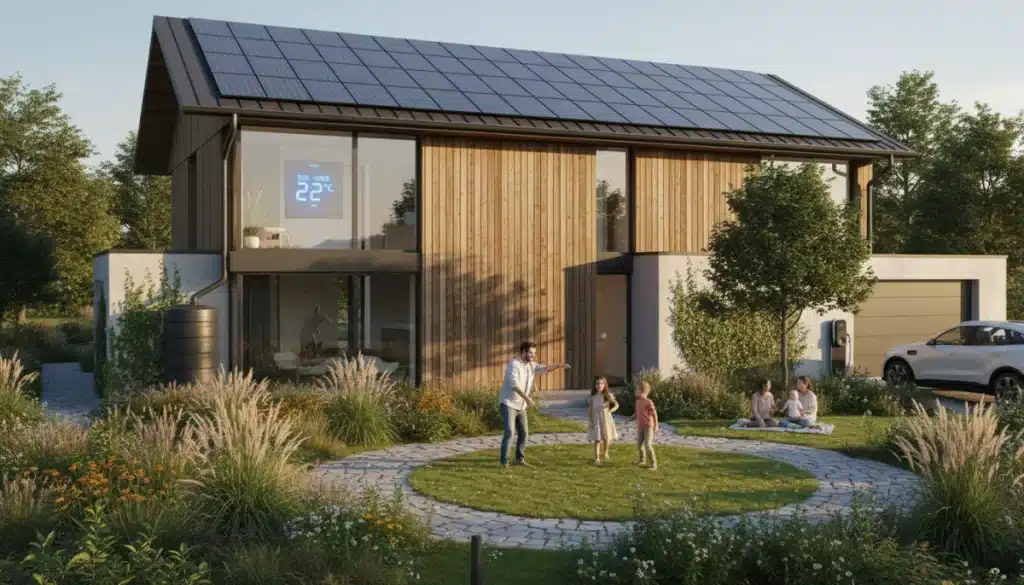
US consumers can significantly reduce costs on home energy upgrades in 2026, saving up to 20% through a robust landscape of federal and state green energy incentives, including tax credits, rebates, and innovative financing solutions designed to foster sustainability.
The landscape of homeownership in the United States is rapidly evolving, with sustainability at its forefront. As we look towards 2026, the opportunity for US consumers to save substantially on home upgrades through **green energy incentives** has never been more promising. This trend not only benefits the planet but also offers tangible financial rewards, making energy-efficient living an accessible reality for many.
The growing momentum of green energy in the US
The push for green energy in the United States is more than just an environmental movement; it’s a significant economic and policy shift. As 2026 approaches, we observe a clear escalation in governmental and private sector commitment to sustainable practices, particularly within the residential sector. This momentum is driven by a confluence of factors, including global climate goals, energy independence aspirations, and a growing consumer demand for eco-friendly living solutions.
This increased focus translates into a robust framework of support for homeowners looking to reduce their carbon footprint and energy bills. From federal mandates to state-specific programs, the infrastructure designed to facilitate green home improvements is expanding, offering unprecedented opportunities. Understanding the breadth of these initiatives is the first step toward unlocking significant savings and contributing to a more sustainable future.
Federal initiatives driving green home upgrades
Advertisement
At the federal level, several key pieces of legislation and ongoing programs form the backbone of green energy incentives. These initiatives aim to standardize and encourage the adoption of renewable energy sources and energy-efficient technologies across the nation.
- The Inflation Reduction Act (IRA): This landmark legislation continues to offer substantial tax credits for homeowners installing solar panels, heat pumps, and other energy-efficient improvements.
- Energy Star Program: While not a direct financial incentive, Energy Star certifications guide consumers towards appliances and products that meet strict energy efficiency guidelines, often qualifying for other rebates.
- Department of Energy (DOE) Grants: Various DOE programs provide funding for research, development, and deployment of clean energy technologies, some of which trickle down to consumer-level incentives.
The federal government’s role is crucial in setting the stage and providing a broad incentive structure that states and local entities can then build upon. These overarching programs ensure a baseline level of support for homeowners nationwide, making green upgrades more financially viable.
In conclusion, the accelerating momentum behind green energy in the US is creating a fertile ground for homeowners. The combination of environmental consciousness, economic benefits, and supportive governmental policies is making 2026 a pivotal year for those considering energy-efficient home upgrades. The federal framework provides a strong foundation, paving the way for further incentives at state and local levels.
Unpacking federal tax credits for energy-efficient homes
Federal tax credits remain one of the most impactful ways US consumers can save on green home upgrades. These credits directly reduce the amount of income tax owed, offering a dollar-for-dollar reduction that can significantly offset the initial investment in energy-efficient technologies. Navigating these credits requires understanding their specific criteria, eligible improvements, and how to claim them effectively.
The core of these incentives often stems from legislation like the Inflation Reduction Act, which extended and expanded many popular tax credits. These provisions are designed to make renewable energy systems and energy-saving home improvements more affordable for the average American household, accelerating the transition to a cleaner energy economy.
Key federal tax credits to consider in 2026
For 2026, several federal tax credits are particularly relevant for homeowners planning green upgrades. Each credit has specific requirements and caps, making it essential to research thoroughly or consult with a tax professional.
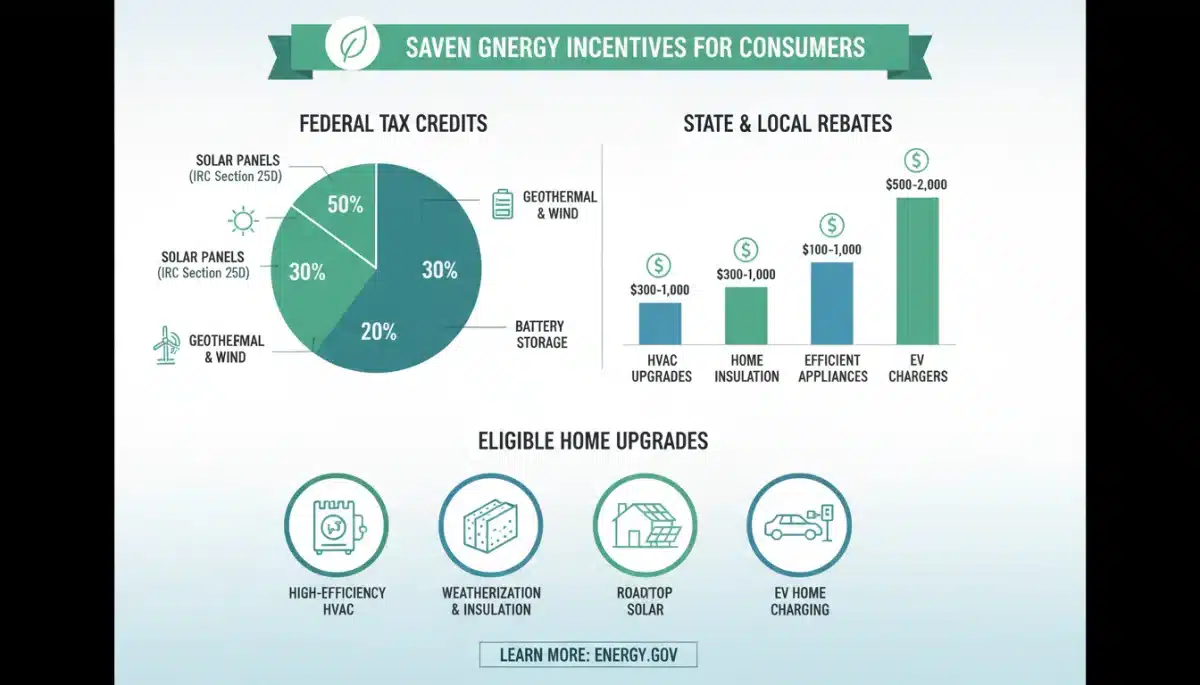
- Residential Clean Energy Credit (Section 25D): This credit covers 30% of the cost of new, qualified clean energy property for your home, including solar electric panels, solar water heaters, wind turbines, geothermal heat pumps, and battery storage technology. There is no credit limit except for fuel cell property.
- Energy Efficient Home Improvement Credit (Section 25C): This credit offers up to 30% of the cost of eligible home energy efficiency improvements, with annual limits. This includes items like exterior doors, windows, skylights, insulation, electric heat pumps, central air conditioners, and biomass stoves. Annual limits apply, typically up to $1,200 for most upgrades and up to $2,000 for heat pumps, biomass stoves, or biomass boilers.
- New Energy Efficient Home Credit (Section 45L): While primarily for builders, this credit can indirectly benefit homebuyers of newly constructed energy-efficient homes, as builders may pass on savings.
Understanding the nuances of these credits, such as whether they apply to primary residences only or include second homes, is crucial for maximizing savings. Documentation, such as receipts and manufacturer certifications, will be necessary when filing taxes.
In summary, federal tax credits are a cornerstone of financial incentives for green home upgrades. By carefully planning improvements and understanding the eligibility requirements for credits like the Residential Clean Energy Credit and the Energy Efficient Home Improvement Credit, homeowners can achieve substantial savings. These credits are a direct financial reward for investing in a more sustainable and energy-efficient home.
State and local rebates: A localized savings guide
Beyond federal incentives, a rich tapestry of state and local rebates offers additional opportunities for US consumers to save on green energy upgrades. These programs are often tailored to specific regional needs, climate conditions, and local energy goals, providing targeted financial relief that complements federal tax credits. Exploring these localized options can significantly amplify your overall savings.
The availability and specifics of these rebates vary widely from state to state and even from city to city. They are frequently administered by state energy offices, local utility companies, or municipal governments. These programs often aim to encourage the adoption of technologies that align with local environmental policies or grid stability objectives.
Navigating state and utility rebate programs
To effectively leverage state and local rebates, homeowners need to be proactive in their research. A good starting point is often your state’s energy department website or your local utility provider’s customer portal. Many utilities offer rebates for installing energy-efficient appliances, smart thermostats, or even for conducting home energy audits.
For example, some states might offer specific rebates for high-efficiency HVAC systems, while others might focus on water-saving appliances or electric vehicle charging infrastructure. The key is to identify programs active in your specific geographic area and understand their eligibility criteria and application processes.
Many state programs also offer low-interest loans or grants for energy efficiency improvements, especially for low-income households or those in designated underserved communities. These programs often have specific income thresholds or property requirements.
In conclusion, state and local rebates are a vital component of the green energy incentive landscape. By diligently researching programs offered by state agencies and local utility companies, homeowners can discover additional savings opportunities tailored to their region. These localized incentives, when combined with federal tax credits, create a powerful financial incentive for making sustainable home upgrades.
Innovative financing options for green home improvements
While tax credits and rebates significantly reduce the cost of green home upgrades, the initial outlay can still be substantial. This is where innovative financing options come into play, making these investments more accessible to a broader range of homeowners. Understanding these financing mechanisms can help bridge the gap between aspiration and implementation, allowing more US consumers to benefit from energy-efficient homes.
The market for green financing has matured considerably, with a variety of products designed specifically for sustainable home improvements. These options often feature lower interest rates, longer repayment terms, or specialized structures that make them more attractive than traditional loans.
Exploring specialized green loans and PACE programs
Several financing avenues are designed to support green home improvements:
- PACE (Property Assessed Clean Energy) Loans: These unique financing options allow property owners to fund energy efficiency, renewable energy, and water conservation upgrades. Repayment is made through an assessment on the property’s tax bill, often transferable to a new owner if the property is sold. PACE programs are state and local initiatives, so availability varies.
- FHA Title I Loans: The Federal Housing Administration (FHA) offers Title I loans for home improvements, which can include energy-efficient upgrades. These loans can be used for smaller projects and have less stringent credit requirements than some conventional loans.
- Energy-Efficient Mortgages (EEMs): EEMs allow borrowers to finance energy-efficient improvements into their mortgage or purchase a home that is already energy-efficient. These loans recognize that lower utility bills will free up income to cover a slightly larger mortgage payment, making it easier to qualify.
- Credit Union and Bank Green Loan Programs: Many financial institutions now offer specific loan products for energy-efficient upgrades, often with competitive interest rates as part of their commitment to sustainability.
When considering financing, it’s crucial to compare interest rates, repayment terms, and any associated fees. Understanding how these loans interact with existing mortgages or property taxes is also vital for long-term financial planning.
In conclusion, innovative financing options are essential tools for making green home improvements more attainable. Programs like PACE loans, FHA Title I loans, and Energy-Efficient Mortgages, alongside specialized green loans from financial institutions, provide flexible pathways to fund sustainable upgrades. These options help homeowners manage the upfront costs, making energy efficiency a more immediate reality.
Maximizing savings: A strategic approach to home upgrades
To truly capitalize on the array of green energy incentives available in 2026, a strategic approach is essential. Simply installing a single energy-efficient appliance might yield some savings, but a comprehensive plan can unlock significantly greater financial and environmental benefits. This involves careful planning, understanding the interplay of different incentives, and prioritizing upgrades for maximum impact.
The goal is not just to replace old systems but to create a holistic, energy-efficient home ecosystem. This often means considering how different upgrades work together, such as combining improved insulation with a new heat pump, or solar panels with battery storage. Each component can amplify the benefits of the others.
Planning your green home upgrade journey
A well-thought-out plan can help homeowners navigate the complexities of incentives and ensure the greatest return on investment. Here are key steps:
- Home Energy Audit: Start with a professional energy audit to identify the biggest energy drains in your home. This will pinpoint the most impactful upgrades.
- Prioritize High-Impact Upgrades: Focus on improvements that offer the best combination of energy savings and available incentives, such as insulation, efficient windows, HVAC systems, and solar installations.
- Layer Incentives: Investigate how federal tax credits can be combined with state rebates and utility programs. Some incentives can be stacked, while others may have restrictions.
- Research Local Contractors: Choose contractors experienced in green energy installations and knowledgeable about available incentives. They can often guide you through the application processes.
- Understand Eligibility and Documentation: Keep meticulous records of all purchases, installations, and certifications. This documentation is crucial for claiming tax credits and rebates.
By taking a strategic, step-by-step approach, homeowners can avoid common pitfalls and ensure they are maximizing every available dollar in savings. This not only reduces the financial burden but also optimizes the long-term energy performance of their home.
In conclusion, maximizing savings on green home upgrades requires a strategic and informed approach. By conducting energy audits, prioritizing high-impact improvements, layering various incentives, and working with knowledgeable professionals, homeowners can achieve the greatest financial and environmental benefits. This thoughtful planning ensures that every investment in sustainability yields optimal returns.
The long-term benefits of green energy investments
While the immediate financial savings from incentives are compelling, the long-term benefits of investing in green energy home upgrades extend far beyond initial cost reductions. These advantages encompass increased home value, reduced utility bills for years to come, enhanced comfort, and a significant positive impact on the environment. Understanding these enduring benefits reinforces the value proposition of going green.
The decision to upgrade to energy-efficient systems is not just a one-time financial transaction; it’s an investment in the future of your home and the planet. These upgrades contribute to a more resilient, comfortable, and economically sound living environment.
Beyond savings: Value, comfort, and environmental impact
- Increased Home Value: Energy-efficient homes are increasingly attractive to buyers, often commanding higher resale values. Features like solar panels, efficient HVAC systems, and smart home technology are significant selling points.
- Lower Utility Bills: This is perhaps the most direct and continuous financial benefit. Reduced energy consumption translates into lower monthly expenses, freeing up household income for other priorities.
- Enhanced Home Comfort: Better insulation, modern windows, and efficient heating/cooling systems lead to more consistent indoor temperatures, fewer drafts, and improved air quality, creating a more comfortable living space.
- Environmental Stewardship: By reducing your home’s carbon footprint, you contribute directly to combating climate change and promoting a healthier planet for future generations. This can also foster a sense of personal pride and responsibility.
- Energy Independence and Resilience: Generating your own power with solar panels can reduce reliance on the grid, offering more stability during outages and potentially hedging against future energy price increases.
These long-term benefits underscore that investing in green energy is a wise decision that pays dividends for years, both financially and in terms of quality of life. The initial effort to navigate incentives and implement upgrades is richly rewarded over time.
In conclusion, the long-term benefits of green energy investments are substantial and far-reaching. Beyond immediate savings from incentives, homeowners gain increased property value, enjoy consistently lower utility bills, experience enhanced comfort, and contribute positively to environmental sustainability. These enduring advantages solidify green home upgrades as a smart, forward-looking choice for any US consumer.
| Key Incentive Type | Brief Description |
|---|---|
| Federal Tax Credits | Direct reduction in federal income tax for eligible energy-efficient home improvements and renewable energy installations. |
| State & Local Rebates | Cash back or discounts offered by state governments, municipalities, or utility companies for specific green upgrades. |
| Green Financing Options | Specialized loans (e.g., PACE, EEMs) with favorable terms for funding energy-efficient and renewable energy home projects. |
| Long-Term Benefits | Increased home value, lower utility bills, enhanced comfort, and positive environmental impact from green upgrades. |
Frequently asked questions about green energy incentives
Many upgrades qualify, including solar panels, wind turbines, geothermal heat pumps, battery storage, energy-efficient windows, insulation, exterior doors, and qualified electric heat pumps. The specific credit (Residential Clean Energy or Energy Efficient Home Improvement) dictates exact eligibility and limits.
Yes, in most cases, you can combine federal tax credits with state and local rebates. However, it’s crucial to check the specific rules for each program, as some might have restrictions or require you to subtract rebate amounts before calculating the tax credit.
PACE (Property Assessed Clean Energy) is a financing mechanism for energy efficiency and renewable energy upgrades. The loan is repaid through an assessment on your property tax bill, often transferable to a new owner. Availability depends on your state and local government.
The best resources are your state’s energy office website, your local utility company’s website, and municipal government portals. Many organizations also provide searchable databases of incentives by zip code, which can be very helpful.
Most federal tax credits do not have income limitations. However, some state and local programs, particularly grants or low-interest loans, may be specifically targeted toward low-to-moderate income households. Always check individual program requirements.
Conclusion
The year 2026 represents a golden opportunity for US consumers to embrace green energy and achieve substantial savings on home upgrades. With a robust landscape of federal tax credits, diverse state and local rebates, and innovative financing solutions, the path to a more sustainable and energy-efficient home is clearer and more financially rewarding than ever. By strategically planning upgrades and leveraging available incentives, homeowners can not only reduce their environmental footprint but also enhance their property value, lower utility bills, and enjoy greater comfort for years to come. The time to invest in a greener future for your home is now.
