US Economic Forecast 2026: Experts Predict 3% GDP Growth
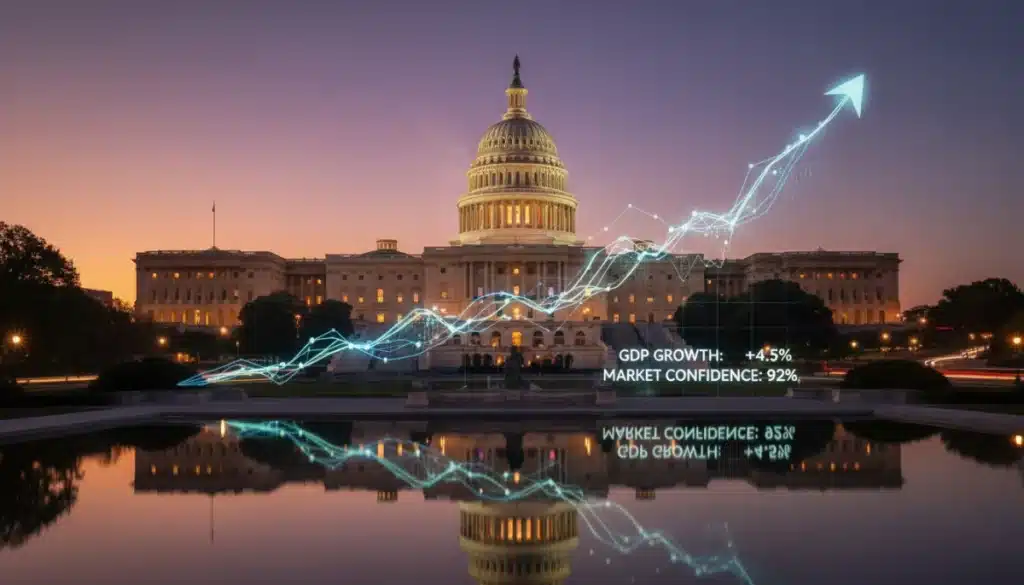
The 2026 US economic forecast anticipates a solid 3% GDP growth, fueled by technological innovation and strategic fiscal policies, despite ongoing global economic uncertainties.
As we look towards the mid-point of the decade, the US Economic Forecast 2026 presents a compelling narrative of resilience and potential. Experts are projecting a significant 3% GDP growth, a testament to the nation’s adaptive capacity amidst a dynamically shifting global economic landscape. This outlook is not merely a statistical projection but reflects deep analyses of underlying trends, policy directions, and emerging opportunities that will shape the American economy.
Understanding the 3% GDP Growth Projection
The prediction of a 3% GDP growth for the US economy in 2026 is a beacon of optimism, especially considering the volatility experienced in recent years. This figure suggests a strong rebound and sustained expansion, driven by several key factors that are currently in play or expected to materialize. Economists base these projections on a meticulous examination of consumer spending patterns, business investment intentions, government expenditure, and net exports.
Achieving a 3% growth rate would place the US economy in a robust position, signaling healthy job creation, increased corporate profits, and improved living standards. It implies that the nation has successfully navigated the immediate post-pandemic challenges and is now capitalizing on new growth engines. This level of growth is often associated with periods of innovation and increased productivity, which are critical for long-term economic health.
Factors Influencing GDP Growth
Advertisement
Several critical elements contribute to this optimistic GDP outlook. Consumer confidence, a primary driver of economic activity, is expected to remain high, supported by stable employment and wage growth. Businesses, in turn, are anticipated to increase their capital expenditures, investing in new technologies and infrastructure to boost efficiency and expand operations. These domestic factors are complemented by a strategic approach to international trade and global economic engagement.
- Strong Consumer Spending: Continued demand for goods and services.
- Robust Business Investment: Companies pouring capital into expansion and innovation.
- Government Policies: Fiscal measures supporting economic stability and growth.
- Technological Advancements: Driving productivity and creating new industries.
The 3% GDP growth forecast is not a given; it relies on a delicate balance of these factors and the ability of policymakers to respond effectively to unforeseen challenges. However, the current trajectory and expert consensus point towards a positive economic environment.
Navigating Global Economic Shifts and Geopolitical Tensions
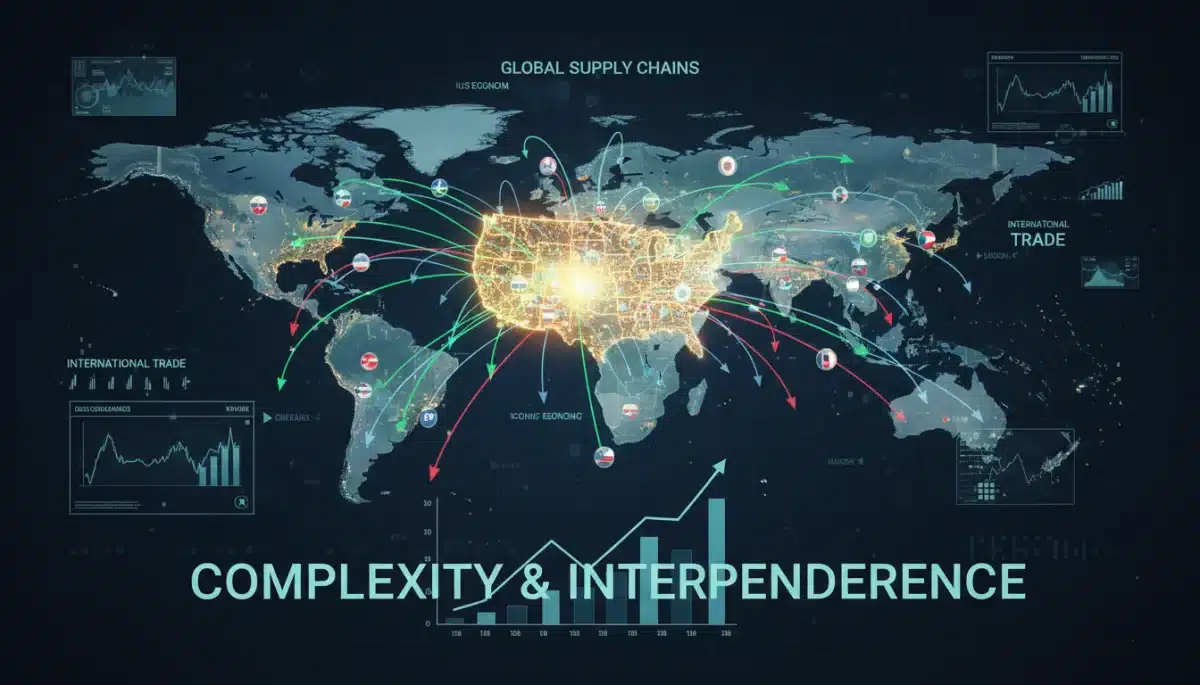
The global economic landscape is in a constant state of flux, marked by evolving trade relationships, geopolitical tensions, and the emergence of new economic powers. For the US economy to achieve a 3% GDP growth in 2026, it must adeptly navigate these complex international dynamics. The interconnectedness of global markets means that events in one region can have ripple effects across the world, influencing everything from supply chains to investor confidence.
Geopolitical tensions, in particular, pose a significant risk to economic stability. Conflicts, trade disputes, and shifts in international alliances can disrupt supply chains, increase commodity prices, and deter foreign investment. The US, with its vast economic influence, plays a crucial role in shaping these global narratives, and its foreign policy decisions will undoubtedly impact its economic trajectory.
Impact on Trade and Investment
Global shifts directly influence US trade balances and foreign direct investment. As countries re-evaluate their trade partners and supply chain resilience, new opportunities and challenges arise. The US is focused on strengthening its domestic manufacturing capabilities while also forging strategic alliances to diversify its economic partnerships. This dual approach aims to mitigate risks and capitalize on emerging markets.
- Supply Chain Reconfiguration: Efforts to reduce dependence on single sources.
- Trade Agreement Revisions: Adapting to new global economic realities.
- Foreign Investment Flows: Attracting capital while investing strategically abroad.
- Currency Fluctuations: Managing the impact of global currency movements.
Maintaining strong diplomatic ties and engaging in constructive international dialogue will be paramount for the US to ensure a favorable global environment for its economic growth. The ability to adapt to these shifts will be a defining characteristic of the 2026 economic outlook.
The Role of Technology and Innovation in Economic Expansion
Technological innovation is undoubtedly the bedrock of sustained economic growth, and the 2026 forecast for the US economy is no exception. Breakthroughs in artificial intelligence, biotechnology, renewable energy, and advanced manufacturing are not just creating new products and services; they are fundamentally transforming industries and boosting productivity across sectors. This wave of innovation is expected to be a primary driver behind the projected 3% GDP growth.
The US has historically been a leader in technological advancement, fostering an ecosystem that encourages research, development, and entrepreneurship. This environment, coupled with significant private and public investment in R&D, ensures a continuous pipeline of disruptive technologies that can fuel economic expansion. The adoption of these technologies by businesses leads to increased efficiency, reduced costs, and enhanced competitiveness on a global scale.
Key Technological Drivers
Several technological sectors are poised to make significant contributions to the economy by 2026. Artificial Intelligence (AI) is already revolutionizing data analysis, automation, and decision-making, promising substantial gains in various industries. The continued expansion of 5G networks and the advent of 6G will unlock new possibilities for connectivity and data-intensive applications. Furthermore, advancements in sustainable technologies are not only addressing climate change but also creating entirely new markets and job opportunities.
- Artificial Intelligence (AI): Enhancing productivity and creating new applications.
- Biotechnology: Driving innovation in healthcare and agriculture.
- Renewable Energy: Creating new industries and energy independence.
- Advanced Manufacturing: Revolutionizing production processes and supply chains.
The successful integration and ethical deployment of these technologies will be crucial for the US to realize its economic potential. Investment in education and training to upskill the workforce for these new technological frontiers will also be vital.
Inflationary Pressures and Monetary Policy Outlook
Inflation has been a persistent concern for economies worldwide, and its trajectory will significantly influence the US economic forecast for 2026. While the Federal Reserve has taken aggressive measures to curb rising prices, the long-term outlook for inflation remains a key variable. The 3% GDP growth projection assumes a certain level of price stability, where inflation is managed within acceptable targets, allowing for sustainable economic expansion.
Monetary policy, primarily guided by the Federal Reserve, will continue to play a pivotal role in balancing economic growth with price stability. Decisions regarding interest rates, quantitative easing, and other tools will directly impact borrowing costs, consumer spending, and business investment. A delicate hand is required to stimulate growth without reigniting inflationary spirals.
The Federal Reserve’s Strategy
The Federal Reserve’s strategy for 2026 is expected to focus on maintaining flexibility and data-driven decision-making. As economic indicators evolve, the Fed will likely adjust its policies to ensure maximum employment and stable prices. This adaptive approach is crucial given the dynamic nature of both domestic and global economic forces.
- Interest Rate Adjustments: Influencing borrowing and lending behavior.
- Inflation Targeting: Aiming for a sustainable and healthy inflation rate.
- Quantitative Easing/Tightening: Managing the money supply in the economy.
- Market Communication: Guiding expectations and ensuring transparency.
The ability of the Fed to communicate its intentions clearly and effectively will be essential in anchoring inflation expectations and fostering investor confidence, contributing positively to the overall economic outlook.
Labor Market Dynamics and Workforce Evolution
A healthy labor market is indispensable for sustained economic growth, and the US labor landscape is undergoing significant transformations that will impact the 2026 forecast. The projected 3% GDP growth is intrinsically linked to a dynamic and adaptable workforce that can meet the demands of an evolving economy. Factors such as automation, remote work trends, and the need for new skills are reshaping employment opportunities and challenges.
The US labor market is expected to continue its trend of resilience, with ongoing job creation in high-growth sectors, particularly those driven by technology and innovation. However, addressing skill gaps and ensuring equitable access to education and training will be critical to maintaining low unemployment rates and fostering inclusive growth. The shift towards a more flexible work environment also presents both opportunities and challenges for businesses and employees alike.
Key Labor Market Trends
Several trends are shaping the future of work in the US. The demand for digitally skilled workers is soaring, while automation continues to redefine roles in traditional industries. The gig economy is expanding, offering flexibility but also raising questions about worker benefits and stability. Furthermore, demographic shifts, including an aging workforce, will influence labor supply and demand.
- Digital Skill Demand: Growing need for tech-savvy professionals.
- Automation Impact: Reshaping job roles and increasing efficiency.
- Remote Work Adoption: Permanent shift in work arrangements for many sectors.
- Upskilling and Reskilling: Essential for workforce adaptability.
Policies that support workforce development, provide access to affordable education, and encourage innovation in job creation will be vital for the US to leverage its human capital effectively and support the projected economic growth.
Sector-Specific Growth Drivers and Opportunities
While the overall US economic forecast for 2026 points to a robust 3% GDP growth, this expansion will not be uniform across all sectors. Certain industries are poised for particularly strong performance, driven by a combination of technological advancements, shifting consumer preferences, and strategic national investments. Identifying these sector-specific growth drivers offers valuable insights into the underlying strengths of the American economy.
The technology sector, encompassing everything from software development to semiconductor manufacturing, is expected to remain a powerhouse of innovation and job creation. Similarly, the healthcare industry, fueled by an aging population and continuous breakthroughs in medical science, will see sustained demand and investment. The push towards a greener economy is also creating significant opportunities in renewable energy, electric vehicles, and sustainable infrastructure.
High-Growth Sectors
- Information Technology: Continued dominance in software, AI, and cloud services.
- Healthcare and Biotechnology: Driven by research, demographics, and demand.
- Clean Energy: Investment in renewables, batteries, and sustainable solutions.
- Advanced Manufacturing: Reshoring, automation, and high-tech production.
These sector-specific dynamics highlight the diverse and resilient nature of the US economy, with multiple engines contributing to the overall projected growth. Strategic investments and supportive policies will help these sectors realize their full potential.
| Key Aspect | Brief Description |
|---|---|
| GDP Growth | Experts predict a robust 3% GDP growth for the US economy in 2026. |
| Global Shifts | Navigation of geopolitical tensions and evolving trade relationships is crucial. |
| Technology Impact | Innovation in AI, biotech, and renewables drives productivity and new markets. |
| Monetary Policy | Federal Reserve’s adaptive strategies are key to managing inflation and growth. |
Frequently Asked Questions About the 2026 US Economic Forecast
The projected 3% GDP growth is primarily driven by strong consumer spending, robust business investment, supportive government policies, and significant technological advancements across various sectors. These elements collectively contribute to a positive economic environment.
Global shifts, including geopolitical tensions and evolving trade relationships, will necessitate strategic navigation. The US economy’s resilience will depend on its ability to reconfigure supply chains, adapt trade agreements, and manage international investment flows effectively.
Technology and innovation are central to the 2026 forecast. Advancements in AI, biotechnology, and renewable energy are expected to boost productivity, create new industries, and significantly contribute to overall economic expansion and competitiveness.
The outlook assumes managed inflation within acceptable targets, supported by the Federal Reserve’s flexible and data-driven monetary policies. Interest rate adjustments and clear communication will be crucial to balancing growth with price stability.
High-growth sectors include information technology, healthcare and biotechnology, clean energy, and advanced manufacturing. These industries are benefiting from innovation, demographic trends, and strategic investments, driving significant economic activity.
Conclusion
The US Economic Forecast 2026 paints a picture of cautious optimism, projecting a healthy 3% GDP growth. This outlook is underpinned by robust domestic demand, significant technological advancements, and adaptive monetary policies. While global economic shifts and geopolitical uncertainties present ongoing challenges, the American economy demonstrates a strong capacity for resilience and innovation. The path to achieving this growth will require continued strategic investment in key sectors, a focus on workforce development, and adept navigation of international dynamics to ensure sustained prosperity and stability for the nation.
